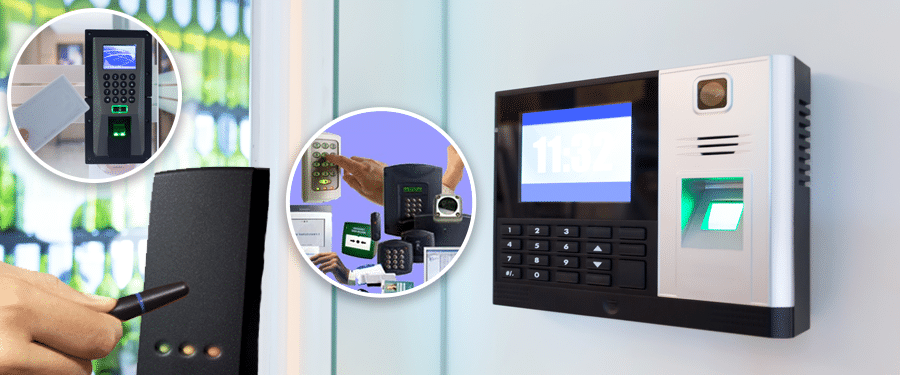

Designed to work together seamlessly, Access Systems' products provide you with the technology you need to deliver sophisticated security solutions—from the simplest to the most challenging.
Access control systems
provide authorized individuals safe and secure access in and out of various parts of your business while keeping unauthorized people out. They can range from electronic keypads that secure a single door to large
networked systems for multiple buildings. Access Systems also greatly simplify management of your facility: no need to replace lost keys, hunt down old keys from terminated employees, or wonder who has access to
which areas.
Spend a couple minutes framing the following two questions:
1. What purpose will your door access control service serve?
2. What size access system will your business need?
1. What purpose will your door access control service serve?
To start, sit down and determine the purpose the access control system will serve. The most basic role of an access control system is to keep out anyone who is not supposed to enter an area. This can be the front door, a parking garage, a server room, a personnel records room, or any other sensitive area. You may also want to use an access control system to track when employees come and go. Another point to consider: how secure do you need the system to be? A basic system usually features a keypad or swipe card. Higher security applications may require multiple means of authentication (a card and thumbprint, for example) and include more redundancy. Finally, consider what other systems need to connect to your access control system. Monitored alarm systems and CCTV systems are two good examples.
2.What size access system will your business need?
Next, once you understand the general role the access control system will serve, think about the number of doors you need to secure. Smaller installations may include just one: a server room with an electronic keypad
lock is a common example of a very small access control system. Remember that not every door has to have access control; you can simply leave some locked and only give keys to appropriate personnel. If you plan
ahead a little when purchasing your system, you should find it fairly easy to expand later. The smallest systems, designed for one or two doors, are not very expandable, but many four and eight door systems can
be linked together when you need to expand. Once you know the number of doors you will be securing, gather information on each one: the physical makeup and use of your doors will impact the type of locks and entry
systems you need. Here are some additional questions to help frame your thinking.
Are some doors for customers, and some only for employees?
Are the doors wood, steel, or aluminium and glass?
Are any designated as fire doors?
Do you have any garage doors or parking lot gates to control?
Larger installations may include more than one site. An access control system that can be operated over a network lets you manage the security at all your locations from a central point.
Another
key distinction in access control systems is the difference between free exit and controlled exit systems. In a free exit system, there is no requirement for leaving a secure area. The system either detects someone
approaching an exit (usually through motion sensors) and unlocks the door, or has a release button or bar that allows people to Exit. In a controlled exit system, the system requires the use of the same security
for travel in both directions: employees have to enter the code or wave their card to get in or out of the secure area. By law, access control systems have to be set up to allow people to exit if the system fails
or power goes out. Controlled exit systems increase both security and your overall costs.
Get Your Roofing Project Started Today!